
[ad_1]
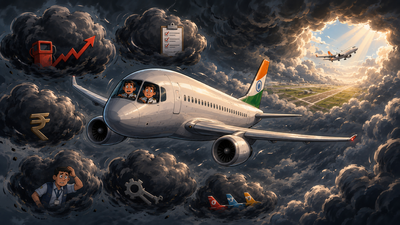
Yatrigan, fasten your seatbelts for not just your flight but the whole aviation sector is experiencing turbulence!Flight delays, rising ticket prices, and cancelled international routes are no longer breaking news, but the new normal. In May 2026, airlines are grappling with a mix of economic and geopolitical pressures, creating a cycle of challenges that keeps feeding into itself.This crisis is not new, it began in 2019 with the Covid era.Since then, the industry has been under constant pressure. Behind every grounded plane and expensive ticket is an aviation sector still struggling after the pandemic, burdened with debt, hit by technical failures, shaken by crashes, affected by wars, and now further squeezed by rising fuel prices.Back home, Indian aviation began this decade with big ambitions. Rising incomes, strong domestic demand, record aircraft orders, and hopes of becoming one of the world’s largest air travel hubs made it one of India’s key growth stories.But by May 2026, that dream is under serious pressure.If Covid laid the foundation of this crisis, everything that followed, engine failures, airspace restrictions, operational disruptions, deadly crashes, and the Middle East fuel shock, has only deepened the strain.
The aviation speed breaker
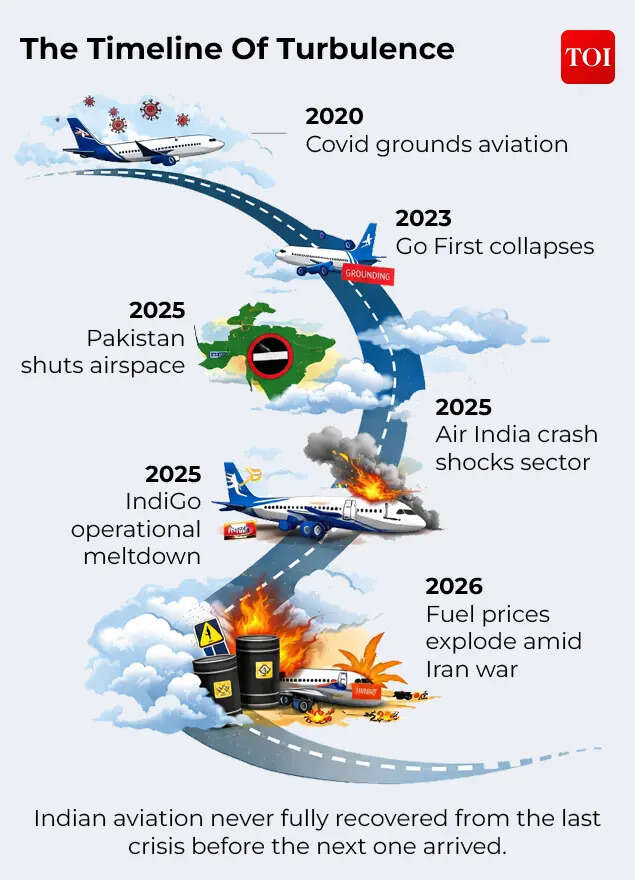
To understand why Indian airlines are suddenly in such deep distress, one must begin before the wars, before the crashes, and before the fuel spike.The real damage began in 2020.The Indian aviation industry suffered heavy financial losses due to the Covid-19 pandemic, with airlines and airports together losing around Rs 22,400 crore in FY 2020–21, according to government data shared in Parliament.Indian aviation carriers took a major hit, losing around Rs 19,000 crore in FY 2020–21, while airports recorded losses of about Rs 3,400 crore. The stress was widespread, with nearly 75% of Airports Authority of India (AAI)-operated airports running in the red. AAI’s finances also took a sharp knock, with revenue falling from Rs 2,976 crore in April–June 2019 to just about Rs 889 crore in April–June 2021.Passenger traffic virtually collapsed during the pandemic. Domestic air travel slipped 0.3% in 2019–20 and then crashed 61.7% in 2021 as Covid-19 grounded demand. At the same time, aviation turbine fuel (ATF) remained a heavy cost burden, with the government noting that lower fuel prices would be key to easing pressure on airlines.To soften the blow, the government rolled out multiple support measures, including cutting GST on Maintenance, Repair and Overhaul (MRO) services from 18% to 5%.Covid-19 severely disrupted India’s aviation sector, causing steep revenue losses, collapsing passenger traffic, and widespread financial stress across airlines, airports, and related services, though government support measures helped cushion the impact.
The V-shaped recovery
Finally, travel bounced back in 2023 and Indian aviation looked like it was finally flying high again. After the pandemic wiped out nearly 75% of the industry’s value in 2020, passengers returned in huge numbers, driven by revenge travel, people rushing to take the holidays and dream trips they had postponed for years. Flights filled up fast, airports got crowded again, and airlines saw demand soar.Domestic travel also recovered quickly, with more people flying within India as travel became a priority again. The mood across the sector was clear: aviation was back. Airlines rushed to grab the opportunity. IndiGo placed some of the world’s biggest aircraft orders, while Air India, under the Tata Group, rolled out an ambitious transformation plan.On the surface, it looked like a stunning comeback. Indian aviation seemed bigger, stronger, and ready for a new era.
- Massive fleet orders
- New lease obligations
- Route expansion
- Pilot hiring
- Capacity growth
Together, Indian carriers placed orders for more than 1,500 aircraft in recent years.Then, the revenge travel boom faded. But airlines were still locked into enormous lease payments.
The Middle East crisis may impact India’s aviation sector, especially westbound long-haul routes. Airspace restrictions are forcing rerouting, adding 35–70 minutes per flight and increasing fuel burn by 1.3–1.9 tonnes, driving up costs. With the region handling ~10% of global passenger traffic, disruptions are weakening India’s international connectivity.
Bhavana Yerrumreddy, Partner, Aviation, EY India
Go First’s collapse and the fear factor for lessors
Go First’s collapse in May 2023 was not just another airline shutdown, it became a major warning sign for India’s aviation sector. When the airline filed for insolvency, global aircraft lessors were caught in a legal mess between India’s insolvency laws and international leasing rules, making it difficult for them to take back their planes.Go First collapsed in 2023 after engine failures grounded a large part of its fleet, already having half of its fleet grounded due to Pratt & Whitney engine issues. Go First said its troubles stemmed not from financial mismanagement, but from persistent engine failures. In its bankruptcy filings, the airline said it did not miss a single debt repayment deadline.Instead, it squarely blamed US engine manufacturer Pratt & Whitney, alleging that the growing number of faulty engines supplied by the company forced it to ground a large portion of its fleet, triggering a major cash flow crisis.The industry has seen similar collapses before.Kingfisher Airlines fell in 2012 after expanding too fast and taking on huge debt. It tried to offer luxury flying at prices that did not make business sense, and its debt crossed Rs 9,000 crore.Jet Airways, once one of India’s biggest airlines, shut down in 2019 after years of financial trouble. It struggled to cut costs while the market shifted towards cheaper, low-cost airlines, and eventually ran out of money.Meanwhile, SpiceJet is still flying, but it remains under constant financial pressure. The airline continues to battle cash crunches, legal disputes with lessors, and grounded aircraft due to unpaid dues and maintenance problems.
Operation Sindoor impact
If Covid destroyed balance sheets, Operation Sindoor changed airline maps.On May 7, 2025, India attacked terror sites in Pakistan, after the Pahalgham attack. In response, Pakistan declared a total Pakistani airspace closure for Indian carriers.It became one of the biggest operational cost shocks Indian aviation had faced in years.Flights from northern India to Europe, North America, and western destinations suddenly had to avoid Pakistani airspace entirely.
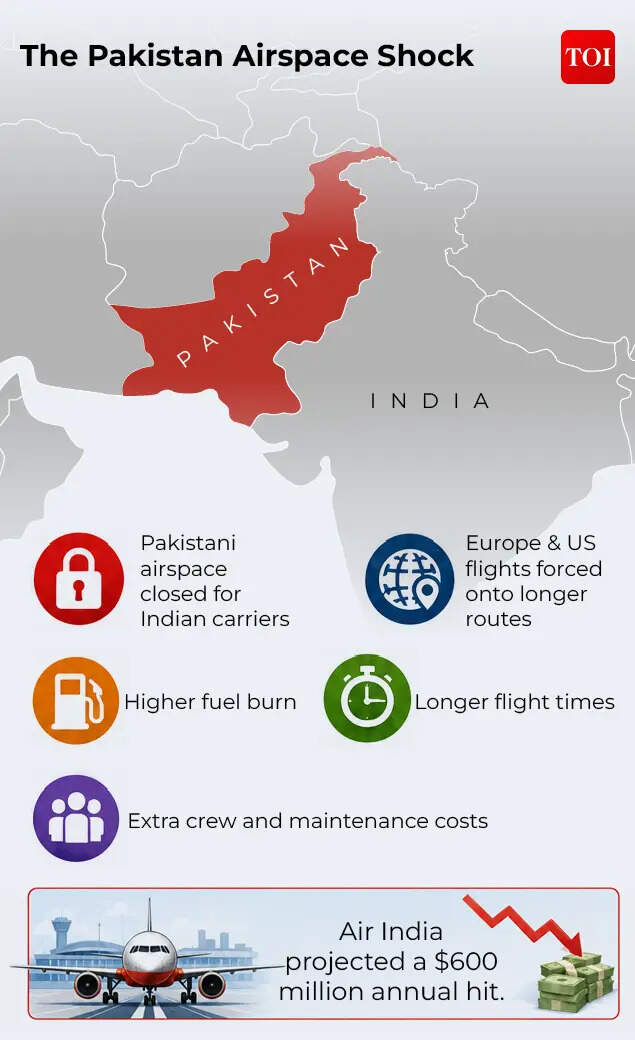
This forced airlines onto the “Long Way Round”: South over Mumbai and the Arabian Sea before turning west.The impact was immediate:
- Extra flight hours on some routes
- Additional fuel burn
- Higher crew costs
- Reduced aircraft utilisation
- More maintenance stress
- Longer turnaround times
For some routes, technical halts became necessary.At the same time, airports across northern India, including Srinagar, Leh, and Amritsar, faced civilian disruptions, wiping out key parts of the lucrative 2025 summer season.As the airspace continued to be disrupted, Air India, forecasted a hit of $600 million a year, according to Reuters.
2025: The darkest blow
The Air India crash
On June 12, 2025, the aviation industry suffered a blow far deeper than financial loss. Air India Flight 171, a Boeing 787 Dreamliner, crashed just 32 seconds after taking off from Ahmedabad, slamming into a medical college hostel.The devastation was immense, 260 lives were lost, making it the deadliest aviation disaster of the decade.
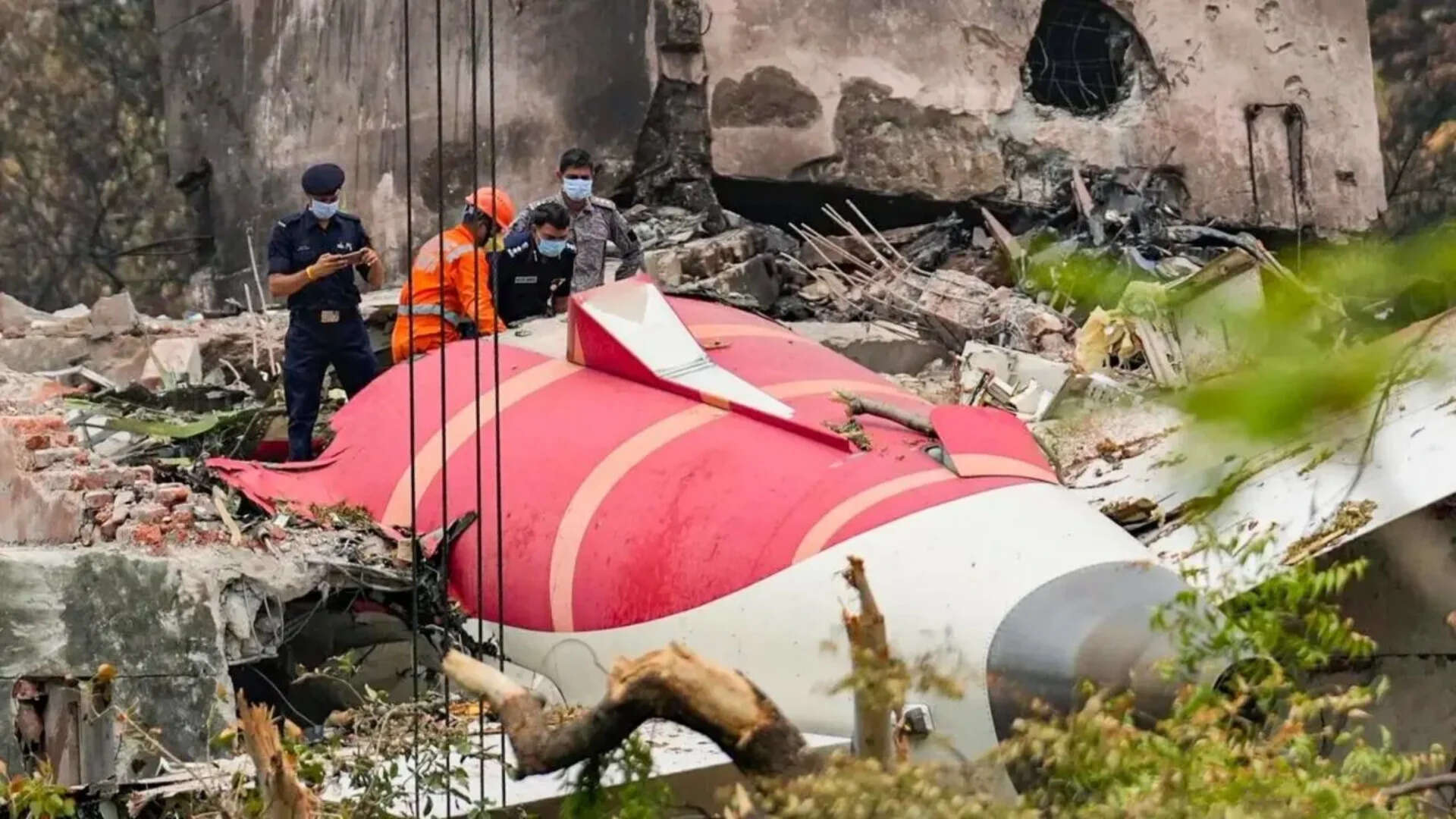
Beyond the unimaginable human tragedy, the crash shook the entire aviation sector. Regulatory scrutiny intensified, safety checks expanded, and airlines came under much greater operational pressure. Insurance premiums reportedly surged by 400%, adding to the financial strain.Passenger confidence weakened, and Air India’s already challenging transformation journey became even more difficult.For Air India, already balancing:
- Fleet modernisation
- Brand rebuilding
- Global expansion
- Operational integration
The crash created reputational and economic damage.
IndiGo’s December meltdown: Even the strongest player cracked
For years, IndiGo had been the pillar of Indian aviation.Its dominance, around two-thirds of domestic market share, made it appear almost too big to fail. But in December 2025, that assumption was shattered.A major Flight Duty Time Limitation (FDTL) scheduling crisis, pilot shortages, and inadequate staffing buffers triggered one of the largest operational meltdowns in modern Indian aviation.The scale of disruption was staggering. More than 5,000 flights were cancelled in just two weeks, affecting around 9.8 lakh passengers and throwing wedding plans, holidays, and travel schedules across the country into chaos.
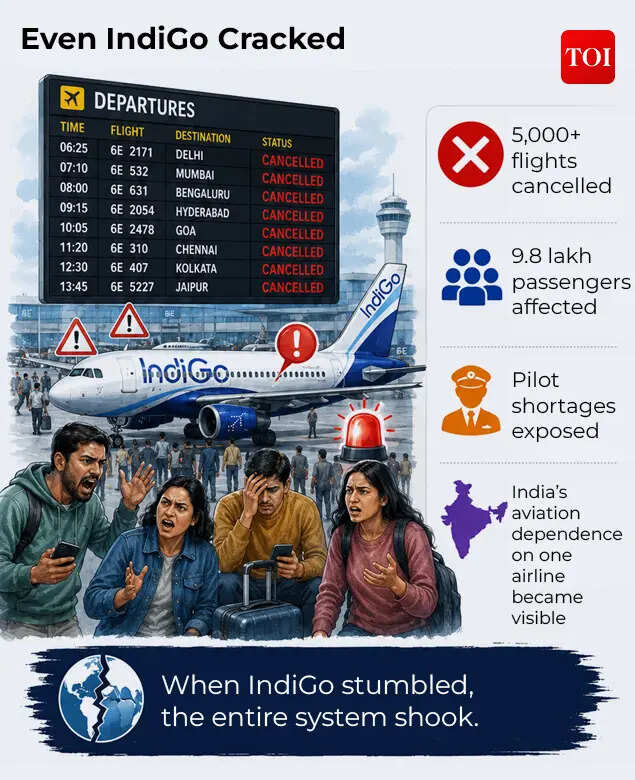
Compensation payouts alone touched Rs 22.76 crore in a single month as cancellation rates spiked sharply.But the bigger warning went beyond the immediate disruption, it exposed how dangerously dependent India’s aviation ecosystem had become on one airline. When IndiGo faltered, the entire domestic network felt the shock. Fare surges, capacity shortages, and widespread instability spread across the country, proving that rapid expansion without strong operational resilience had turned into a systemic risk.All these numbers were building up for an even steeper shock — the Middle East hit.
Another blow: The Middle East war and fuel shock
Just when airlines were trying to recover from debt, grounded planes, crashes, and airspace chaos, 2026 brought an even bigger storm.
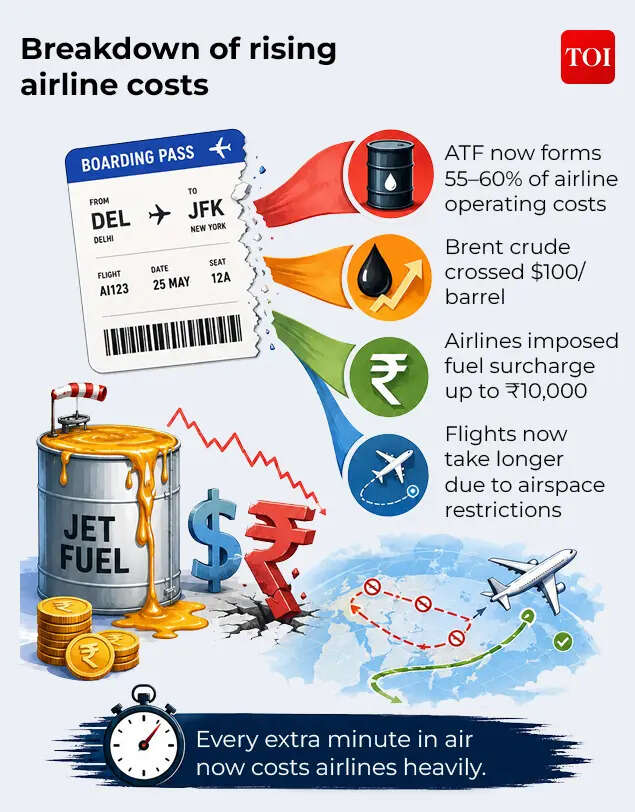
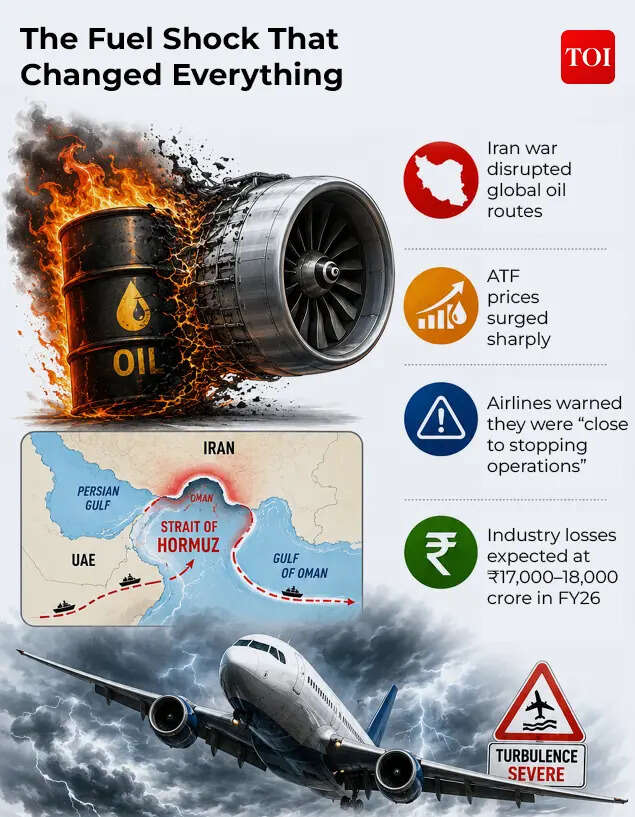
It all began on the ground before hitting the skies. After US-Israel strikes on Iran on February 28, tensions around the Strait of Hormuz, the route for nearly 20% of global oil supplies, sent crude prices soaring.For airlines, that was bad news almost instantly. Fuel, which already makes up 30–40% of operating costs, became far more expensive. ATF prices rose 5.7% in March, while Brent crude jumped from $72 to $105 per barrel. Add a weaker rupee, which makes dollar-based costs like leases and maintenance even pricier, and the pressure only grew.
Key changes hitting flyers
- Fuel surcharges
Airlines have started directly passing on rising ATF costs to passengers. IndiGo has introduced afuel surcharge ranging from Rs 425 to Rs 2,300 on domestic and international tickets. Air India and Air India Express have added a Rs 399 fuel surcharge on domestic tickets from March 12. Akasa Air has introduced fuel surcharges ranging from Rs 199 to Rs 1,300 on domestic and international flights. - 29 international Air India routes affected:
Air India will suspend or reduce frequencies on 29 international routes between June and August 2026. - How Air India’s flights look
On domestic and short international flights (under 2 hours), meals may soon be unbundled from ticket prices. Flyers who skip meals could save over Rs 250 on their ticket. Air India is considering unbundling lounge access, allowing some business travellers to pay less if they do not use lounges.
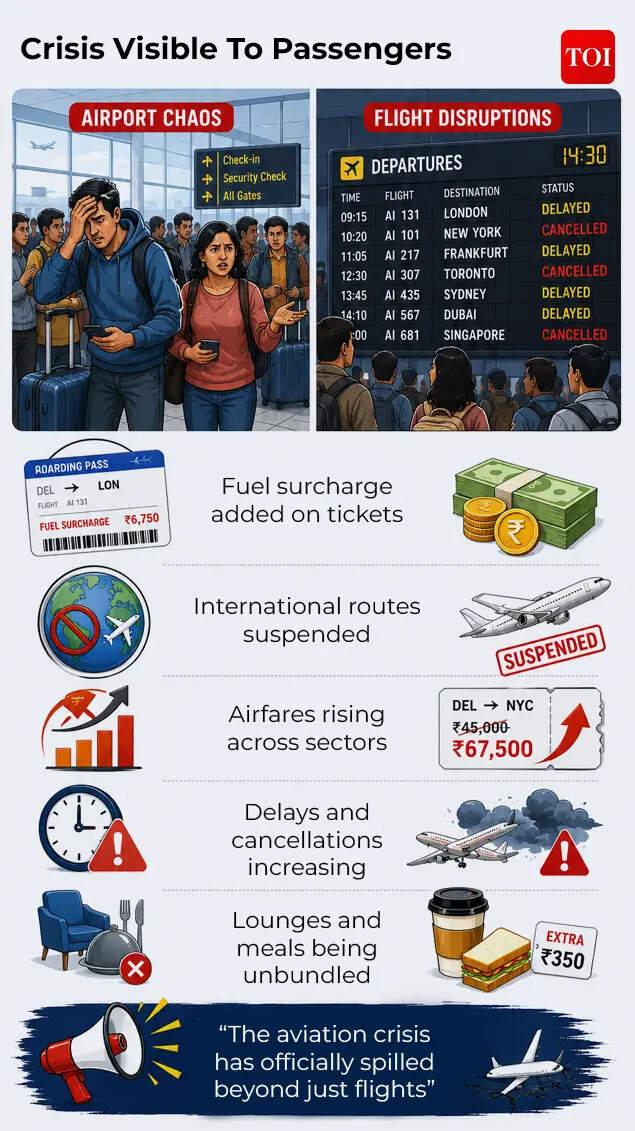
ICRA now expects India’s aviation losses to widen to Rs 17,000–18,000 crore in FY2026, with its outlook downgraded from stable to negative.The fallout may not stop with airlines. Slower passenger growth, rising airfares, and fuel surcharges could mean travellers will continue to pay more too.
Centre steps in to support
Air India, IndiGo, and SpiceJet had urged the government to revise ATF pricing and provide financial relief, warning that soaring fuel costs and liquidity stress are pushing the aviation industry towards an operational crisis.Federation of Indian Airlines (FIA), which represented the three airlines, sounded urgent alarm in an SOS to the government, “The Indian airline industry is under extreme stress and dangerously close to shutting down operations.”In response, the government launched ECLGS 5.0, setting aside Rs 5,000 crore for airlines through government-backed loans of up to Rs 1,500 crore per borrower.The scheme offers a 7-year tenure and a 2-year moratorium to ease cash flow pressure, support jobs, maintain operations, and help airlines manage rising fuel costs, airspace disruptions, and financial strain.
The bottom line
As rising fuel costs, route disruptions, and airspace restrictions continue to shake the aviation sector, industry experts say the Middle East crisis could have deeper consequences for India’s long-term global connectivity.
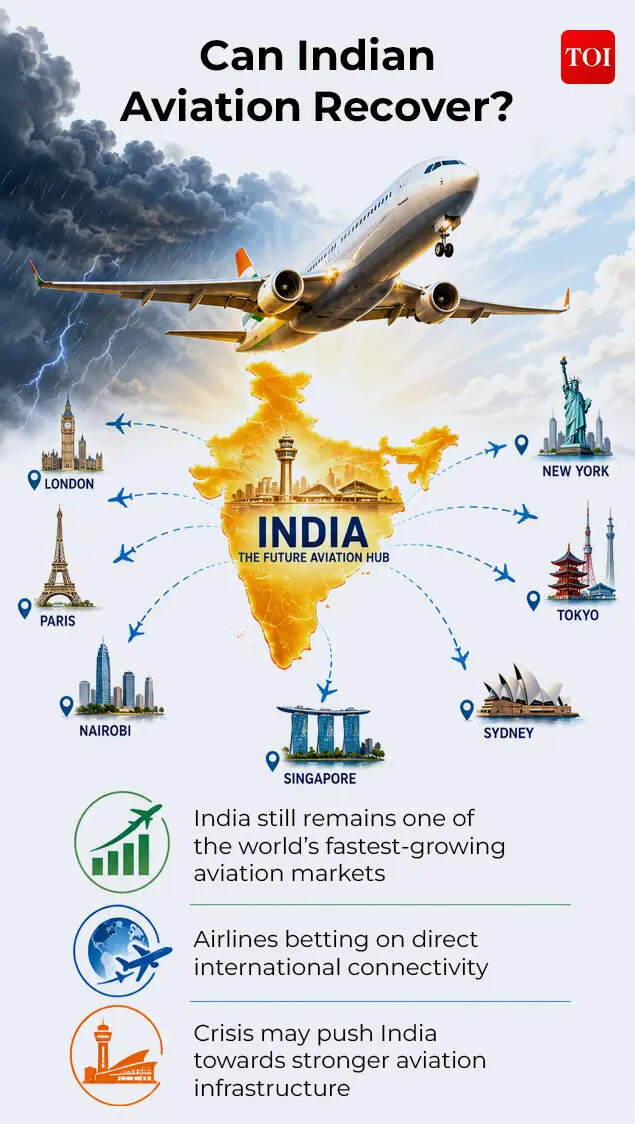
Bhavana Yerrumreddy, partner, aviation at EY India, said the crisis is putting significant pressure on India’s aviation sector, especially on westbound long-haul routes.With airspace restrictions forcing airlines to reroute, flights are becoming 35 to 70 minutes longer, increasing fuel burn by 1.3 to 1.9 tonnes per flight and sharply pushing up costs.She noted that with the Middle East handling nearly 10 per cent of global passenger traffic, these disruptions are also weakening India’s international connectivity.According to Yerrumreddy, “Indian airlines are already facing Rs 12–18 crore in additional monthly costs, while ATF now accounts for 55–60% of operating expenses, up from ~40%. Cargo demand has also softened, with a 4.8% YoY decline, and capacity disruptions peaked at 73%, near pandemic levels. While operations may stabilise in weeks, financial recovery could take one to three quarters.”While flight operations may stabilise within weeks, she said the financial recovery could take one to three quarters.In the longer run, however, the disruption may also force a strategic reset. Yerrumreddy said the crisis is accelerating a shift towards more resilient direct routes, diversified hubs, and flexible aviation networks.With the right policy backing and infrastructure push, India could reduce its reliance on Gulf hubs and emerge stronger as a global aviation hub.Until then, however, Indian aviation remains stuck in a perfect storm where every global disruption, from wars to oil shocks, is now directly reflected in the price of a boarding pass.
[ad_2]
Source link


Автономный GSM-контроллер G202 https://mismar74.ru/G202.html идеальное решение для контроля доступа на парковки, гаражи и территории СНТ. Открытие шлагбаума и ворот с телефона за пару секунд. Встроенная память на 200 номеров, удаленное добавление пользователей через SMS. В наличии на с быстрой отправкой и гарантией!
последние свежие новости алматы новости алматы 2026
Любите охоту? товары для охоты собрал разнообразный выбор для охоты, путешествий и outdoor-активностей. На сайте представлены специализированное снаряжение, охотничья одежда, обувь, оптические приборы, дополнительные принадлежности и снаряжение для походов. Изучайте каталог и выбирайте экипировку, сравнивайте характеристики и покупайте продукцию через сайт. Большой ассортимент поможет быстро найти нужные товары.
При облаштуванні кімнати стильний купити металевий карниз для штор під інтер’єр кімнати. Варто заздалегідь визначити спосіб кріплення. В асортименті одинарні та подвійні карнизи. Зручно підібрати оптимальний варіант. Погляньте спосіб монтажу і виберіть відповідну модель. Правильний вибір зробить віконну зону більш функціональною.
Подберите актуальный https://online-casino-uzbekistan.info чтобы сравнить доступные варианты. В рейтинге доступны для изучения казино с разными условиями. Сравнивайте способы пополнения и вывода средств. Хотите начать игру? Откройте подробный обзор. Перед регистрацией проверьте условия. Играйте ответственно и контролируйте расходы.
Оптимально через интернет купить мощный игровой компьютер для максимальной производительности. На сайте доступны системные блоки. Рассматривайте системный блок для любимых игр. Сравнивая модели смотрите на систему охлаждения. В требовательных играх имеют значение быстрый накопитель. Выбирайте в интернет-магазине и оформляйте доставку по нужному адресу.
Смотрите онлайн захватывающий сериал дневники вампира 2 сезон смотреть онлайн онлайн. Выберите любимый эпизод и включайте серию. На странице сериала доступны разные сезоны. Ищете нужную серию? Найдите нужный сезон и наслаждайтесь просмотром.
Изучите подходящий реальные отзывы казино перед регистрацией. В рейтинге представлены варианты для игроков из Узбекистана. Смотрите доступные бонусы. Планируете регистрацию? Изучите условия регистрации. До начала игры проверьте условия. Играйте ответственно и контролируйте расходы.
Коли потрібно сучасний купити карниз для штор у Києві під інтер’єр кімнати. Краще заздалегідь зіставити тип штор. У колекціях рішення для легких та щільних штор. Нескладно знайти підходящий розмір. Оцініть колірні рішення і порівняйте пропозиції перед покупкою. Правильний вибір підкреслить стиль приміщення.
Подберите лучшее https://online-casino-polsha.info и переходите к доступным играм. Выберите из казино-играм и изучите доступные режимы. На платформе представлены разные игровые категории. Хотите попробовать? Переходите к регистрации. Перед регистрацией проверьте правила, возрастные требования и доступность сервиса в вашем регионе. Играйте ответственно.
Когда необходимо усилить https://nanyat-lichnuyu-ohranu.ru для защиты в повседневных ситуациях. Охранные специалисты осуществляют контроль безопасности клиента. Перед заключением договора стоит уточнить квалификацию сотрудников. Требуется сопровождение? Закажите консультацию и обсудите подходящий формат охраны.