
[ad_1]
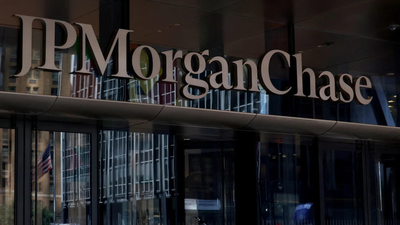
JPMorgan Chase CEO Jamie Dimon has warned that the ongoing war in Iran could trigger oil and commodity price shocks, keeping inflation elevated and pushing interest rates higher than current market expectations, Reuters reported.The warning came in his annual letter to shareholders, a day after US President Donald Trump escalated pressure on Iran by threatening to target key infrastructure if the Strait of Hormuz is not reopened.“Now, because of the war in Iran, we additionally face the potential for significant ongoing oil and commodity price shocks, along with the reshaping of global supply chains, which may lead to stickier inflation and ultimately higher interest rates than markets currently expect,” Dimon said, news agency Reuters quoted as saying. Dimon, who has led JPMorgan for two decades, also highlighted broader geopolitical risks, including the war in Ukraine, tensions in the Middle East and friction with China.“The challenges we all face are significant,” he added.He said it remains uncertain whether the Iran war will achieve US objectives, while warning that nuclear proliferation remains the biggest risk linked to Iran.Markets have already begun pricing in these risks, with expectations of interest rate cuts this year largely fading amid rising inflation concerns triggered by the conflict.Last week, the benchmark S&P 500 index recorded its worst quarterly performance since 2022, weighed down by rising energy prices and geopolitical uncertainty since late February.Dimon noted that the US economy remains resilient, with consumers continuing to earn and spend, and businesses staying broadly healthy, though signs of weakening have emerged.He cautioned that economic strength has been supported by significant government deficit spending and past stimulus, while infrastructure investment needs continue to grow.At the same time, he pointed to positives such as fiscal stimulus under President Trump’s “Big, Beautiful Bill”, deregulation policies and rising capital expenditure driven by artificial intelligence.On financial stability, Dimon said the $1.8-trillion private credit market “probably” does not pose a systemic risk, despite investor concerns and recent withdrawals from such funds.However, he warned that in a downturn, losses across leveraged lending could exceed expectations as credit standards have weakened.Private credit markets also lack transparency and rigorous valuation benchmarks, increasing the risk of investor exits if conditions worsen, he said.Separately, Dimon criticised revised US capital rules, including Basel III and GSIB surcharge norms, calling aspects of the proposals “nonsensical” and “very flawed”.He said JPMorgan’s GSIB surcharge would fall only to 5.0%, a level he described as “absurd” and “un-American”, arguing it penalises the bank’s scale and performance.
[ad_2]
Source link


Переходите к игровой раздел https://testnano.ru и выбирайте подходящие игры. Выберите подходящий игровой формат и приступайте к игре. На платформе доступны варианты развлечений. Хотите начать? Выбирайте игру и начинайте. Играйте ответственно и контролируйте время и расходы.
Оптимально в каталоге купить игровой блок для компьютера для гейминга. В ассортименте собраны игровые компьютеры. Сравнивайте модель с учетом требований игр. При выборе смотрите на SSD. Для современных проектов особенно полезны достаточный объем памяти. Добавляйте в корзину через сайт и получайте компьютер с доставкой.
Пересмотрите фэнтезийную историю смотреть дневники вампира 5 серия с удобного устройства. Выберите нужный сезон и переходите к просмотру. На странице сериала представлены сезоны и эпизоды. Хотите продолжить историю? Найдите нужный сезон и наслаждайтесь просмотром.
Нужна консультация юриста? юристы бесплатно в Одинцово отличная возмодность получить ответы на правовые вопросы. Консультация доступна по вопросам долгов, банковских споров, семейных, трудовых, жилищных и других правовых ситуаций.
Выберите заранее https://www.avito.ru/ekaterinburg/kvartiry/3-k._kvartira_76_m_1032_et._8461234861/ рядом с метро. Перед заключением договора заранее выясните наличие мебели. При ограниченном бюджете целесообразно уточнить все детали у арендодателя. Кому-то особенно важно развитая инфраструктура, тогда как другие ориентируются на стоимость.
Удобно можно квартиру снять Екатеринбург с подходящей планировкой. При подборе варианта полезно изучить состояние квартиры. Комфортное жилье поможет подобрать удобные условия проживания.
Познакомьтесь с особенностями темы при рассмотрении вопроса о кракен ссылка с точки зрения кибербезопасности и анонимных сетей. Аналитические публикации разбирают принципы работы анонимных сетей.
Those who enjoy Japanese comics can webtoon free manhwa while exploring popular works. The library offers thrillers, meaning that any fan can find something enjoyable. New chapters help readers discover what happens next.
Используйте надежное склады ответственного хранения грузов без аренды собственного склада. Складское хранение помогает сократить нагрузку на складскую инфраструктуру. На логистической площадке размещают паллетные партии. При необходимости предусматриваются маркировка продукции. Для производителя подобное решение помогает упростить работу с запасами.
Istrazite nezavisni legalizacija objekata Crna Gora sa idejama za unapredenje enterijera, planiranje radova i stvaranje prijatnog zivotnog prostora. Saznajte vise o savremenim gradevinskim materijalima, tehnikama zavrsne obrade, izboru namjestaja i rjesenjima za udobniji dom. Odaberite razlicite stilove uredenja, procitajte prakticne savjete za renoviranje i pronadite inspiraciju za svoj projekat. Korisni clanci mogu vam pomoci da bolje planirate budzet, izbjegnete ceste greske i stvorite funkcionalan, moderan i dugotrajan prostor za zivot.