



There’s a video of Donald Trump that keeps resurfacing online. The video, from 2016, has Trump telling a rally, “You are going to win so much… you are going to get tired of winning.” It was vintage Trump, part prophecy, part performance, delivered with the confidence of a man who believed victory could become routine.Trump has, in many ways, delivered on that promise. He returned to the White House, something only one other US president has managed, and reshaped American politics in the process. Yet politics has a way of balancing spectacle with subtlety, and even the most dominant narratives are occasionally interrupted by smaller, quieter reversals.Amid a protracted war with Iran and a presidency still defined by scale and confrontation, Trump now finds himself confronting one such moment, an embarrassing loss in a district that includes Mar-a-Lago.
The Big Picture
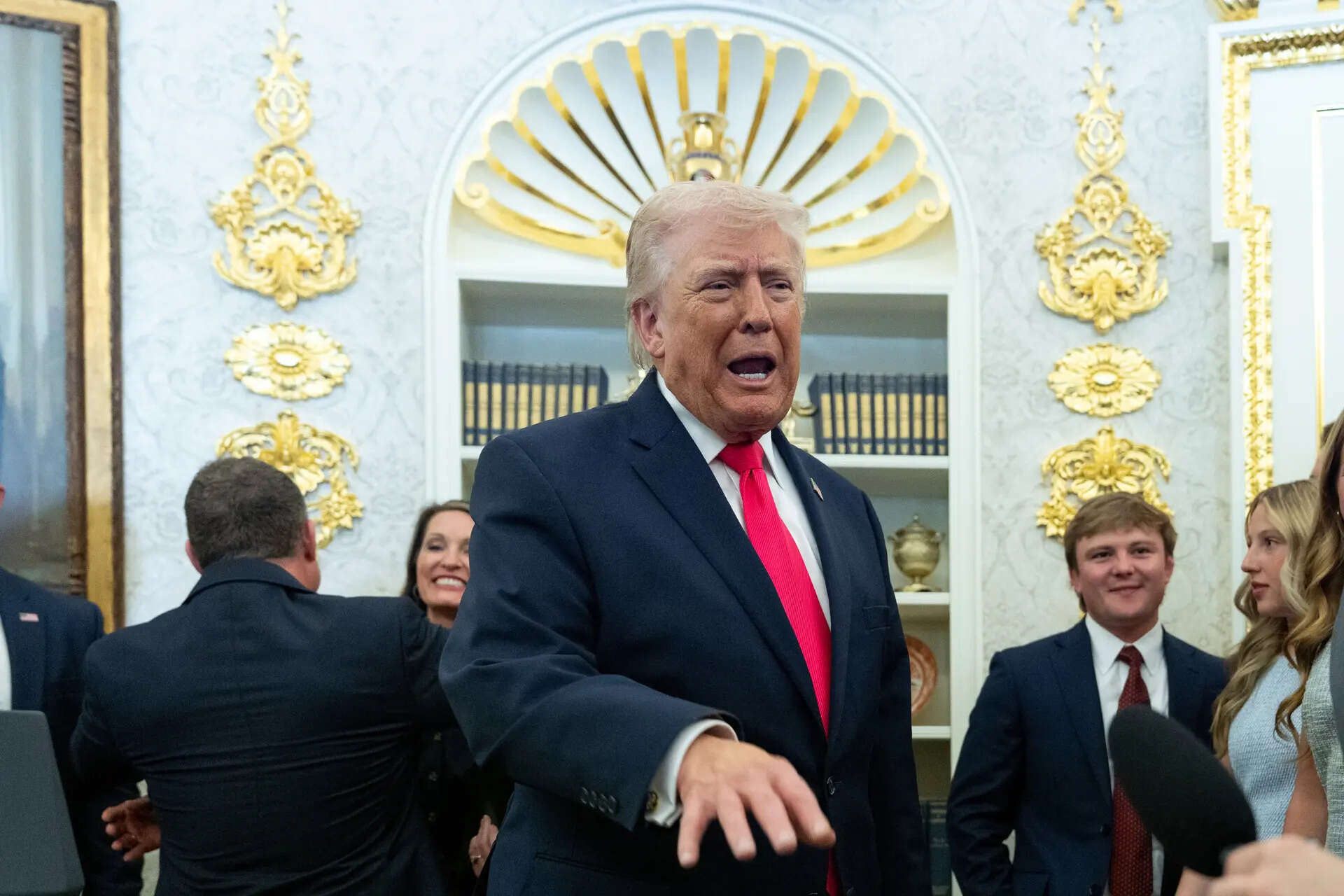
Emily Gregory, a Democrat, flips GOP seat in Trump’s Mar-a-Lago district in tight Florida special election (AP Photo/Alex Brandon)
In Florida’s State House District 87, a constituency in Palm Beach County that includes Trump’s Mar-a-Lago estate, Democrat Emily Gregory defeated Republican Jon Maples, a candidate endorsed by Trump.The result was not expected to be competitive. The district had delivered a 19-point Republican victory in 2024, and Trump himself carried it by a comfortable margin. The voter base continues to favour Republicans, which makes the outcome less a structural shift than a behavioural one.In a low-turnout special election, a first-time Democratic candidate overturned that advantage.The result also aligns with a broader pattern. In the same week, Democrat Brian Nathan, a Navy veteran and union electrician, edged ahead in a State Senate special election in the Tampa area, while across the country Democrats have been narrowing margins and flipping seats in states such as Arkansas, Texas, and New Hampshire.What appears, at first glance, to be an isolated upset begins to look more like part of a trend.
Driving The News
Emily Gregory, a small business owner with a background in public health, ran a campaign that deliberately avoided centring Trump. Instead, she focused on concerns that remain stubbornly local and persistently economic, housing costs, healthcare access, and the broader pressures of affordability in Florida.Jon Maples, her Republican opponent, campaigned with Trump’s endorsement and aligned himself closely with the president’s politics, even appearing alongside him at Mar-a-Lago in the lead-up to the election.The contrast was not ideological so much as tonal. One campaign spoke to national identity and affiliation, while the other spoke to everyday experience.In a district that was expected to remain reliably Republican, it was the latter that resonated.
Why It Matters
Midterm elections are rarely shaped by a single moment. They emerge gradually, through a series of signals that reveal who is energised, who is disengaged, and who is open to persuasion.Trump’s political strength has long been tied to his ability to expand participation, drawing voters who might otherwise remain disengaged into the electoral process. In high-turnout elections, that energy has often translated into advantage for Republicans.What these special elections suggest is a more complex picture.When turnout drops and the spectacle fades, the advantage appears to shift. Democrats have demonstrated a greater capacity to mobilise in these quieter contests, indicating that motivation is no longer evenly distributed. The voters who show up when elections are subdued are sending a different signal from those who respond to the intensity of a presidential race. This does not amount to a rejection of Trump’s politics. It suggests a softening of its urgency.
Reading The Fault Lines
The Florida result reveals a set of deeper currents shaping the political landscape. There is a shift in enthusiasm, with Democratic voters showing a willingness to participate even in elections that lack national attention, suggesting a base that is consistently engaged rather than intermittently mobilised. There is also evidence of persuasion at the margins. In a district with a Republican registration advantage, Gregory’s victory indicates that some voters moved beyond partisan identity, not because their ideology changed, but because their priorities did. There is, finally, the weight of symbolism. Mar-a-Lago is not merely a residence; it is a political marker, a shorthand for Trump’s influence. A loss in its shadow does not alter the balance of power, but it alters the narrative, and narratives in politics tend to travel further than numbers.
The Republican Paradox
Republican responses have emphasised the familiar caution that special elections are unreliable indicators, shaped by low turnout and atypical electorates. That argument is valid, but it sits alongside a more difficult reality.The electorate may not be shifting dramatically, but it appears to be recalibrating. Voters who once responded primarily to national messaging are, in certain contexts, responding more strongly to local concerns, particularly those tied to cost of living and governance.Such changes rarely present themselves as rupture. They unfold gradually, through small adjustments in behaviour that accumulate over time.
The Road To 2026
History offers a familiar guide. The party in power typically faces losses in the midterms, and Republicans, holding the White House, would ordinarily expect that pressure to work against them.What complicates the present moment is the direction of recent results. Democrats have not only secured unexpected wins but have also narrowed margins in districts that once seemed comfortably out of reach. Republican dominance persists, yet it appears less emphatic, more dependent on turnout, and more vulnerable to complacency. This does not yet amount to momentum in the conventional sense. It suggests the early conditions in which one might form.
The Larger Meaning
Trump’s rise transformed American politics by making participation feel urgent and unavoidable. Sustaining that level of intensity over time presents a different challenge. Political energy, when stretched across successive cycles, begins to thin, leaving behind an electorate in which engagement is unevenly distributed.The Mar-a-Lago result does not indicate that Trump’s coalition has fractured. It suggests that parts of it may be less inclined to mobilise when the spotlight dims, while the opposition has learned to operate effectively even in its absence.For Democrats, the moment offers an opening that still requires consolidation. For Republicans, it serves as a warning delivered in a place that was never meant to send one. And for everyone else, it is a reminder that political certainty is always provisional, and that even the most secure ground, given enough time, begins to shift.











Leave a Reply