

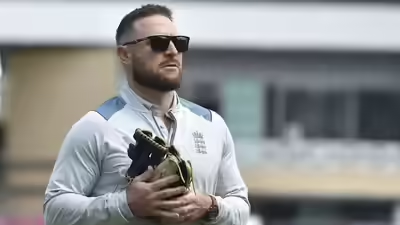
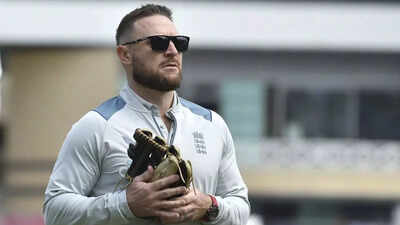
The Brendon McCullum era at England came under intense scrutiny following explosive allegations about dressing-room culture during the disastrous The Ashes tour. Reports, primarily from Telegraph Sport, have painted a picture of a team environment that blurred the line between freedom and lack of discipline, raising serious questions about leadership, accountability, and professionalism.England’s defeat in The Ashes was more than just a loss, it was a systemic failure. Poor preparation, including the lack of meaningful warm-up matches, left the team underprepared for Australian conditions. The aggressive “Bazball” approach, once hailed as revolutionary, unravelled quickly after a heavy defeat in Perth, leaving England without a fallback plan.The report quoted by Telegraph sports highlighted the cultural issues within the dressing room which says that, ” There were players in the Ashes who felt McCullum was naturally drawn to those like him who enjoy a beer, a vape and a round of golf. Unintentionally it created a clique that became more apparent under the stress of an Ashes loss and there were players who felt a non-serious environment had cost them the opportunity of a lifetime in Australia.”
Off-Field Incidents Add Fuel to the Fire
The allegations gained traction amid a series of off-field controversies. Reports further suggested England players spent extended periods drinking during a mid-series break in Noosa, with some accounts claiming up to “six days” of socialising during a nine-day gap between Tests.Incidents involving Harry Brook further intensified scrutiny, including a late-night altercation with a nightclub bouncer in New Zealand prior to the Ashes for which he lied during the press conference. There were also reports of players frequenting casinos and being visibly intoxicated in public during the tour, reinforcing the narrative that off-field distractions contributed to England’s poor performances.This resulted as a loss for England Cricket Team (ECB) as the selection and fitness decisions compounded the crisis. Shoaib Bashir, long viewed as a key weapon, was deemed unfit for selection, while misplaced faith in Ollie Pope proved costly. The management of fast bowlers such as Mark Wood and Jofra Archer backfired, leaving England short of firepower across a demanding five-Test series.After review of the Ashes series, ECB chief Richard Gould changed the culture reported by Telegraph Sports which said,” The players will be disciplined if they are drunk in public, they must not put on social media anything to do with drinking alcohol and must tell the management their location after 9pm. There is a midnight curfew.”
How did McCullum save his job?
After the Ashes debacle, Stokes submitted a report explaining why England lost the Ashes, and according to it, the English captain blamed McCullum and the management. It is also believed that the two pointed fingers at each other during the review, which the ECB launched on the same day when the Sydney Test concluded.
Sri Lanka Tour: The Turning Point
With his job on the line, McCullum made a decisive move by joining England’s white-ball tour of Sri Lanka, despite initially planning to skip it. Arriving just days after the Ashes, he used the opportunity to show adaptability and commitment.He accepted stricter discipline rules introduced by Key and agreed to strengthen the coaching setup, including the return of Carl Hopkinson to address fielding concerns. The results were immediate. England regrouped, with Joe Root playing a pivotal role, and secured a series win that eased pressure on the management. Observers saw this as a defining moment, noting “it gave McCullum an opportunity… to prove he was willing to change.”World Cup Progress, But Questions RemainEngland carried that momentum into the World Cup, where there were clear signs of improvement. Harry Brook thrived in a new role at number three, while Will Jacks and Jacob Bethell added balance and promise to the side.However, the semi-final defeat to India exposed lingering issues under pressure. Despite progress, England once again fell short when it mattered most. As the campaign ultimately showed, “England still lost the match that mattered.”McCullum accepted his errors during the Ashes, and the talks between the two have since reached an agreement. The ECB also refrained from sacking McCullum due to the costs involved. The former New Zealand captain is contracted with England for another 18 months, and a sacking would prove costly for the ECB.











Leave a Reply