[ad_1]
NextEra Energy, one of the largest power companies in the United States, is in advanced talks to acquire Dominion Energy, in a deal that could transform the power industry as it races to supply electricity needed to fuel the booming growth of artificial intelligence, two people familiar with the matter said Sunday.
Technology giants are vigorously building data centers to provide the computing power for A.I. Peak electricity demand in coming summers and winters is expected to jump more than 20 percent nationwide through 2035, due in part to data centers.
NextEra, whose shares have climbed 15 percent this year, has been looking to capitalize on what its chief executive, John Ketchum, has called “America’s golden age of power demand.” Last year, it struck deals with Google in Iowa and Meta in New Mexico.
Florida-based NextEra, which has market value of about $194 billion, is discussing a deal that would exchange about eight-tenths of a share of its stock for each outstanding share of Dominion, the people said. NextEra shareholders would ultimately own about 75 percent of the combined company, and get an additional small portion in cash, they added.
The people, who requested anonymity because the talks are confidential, said the deal could still change or fall apart. The Financial Times earlier reported deal talks, and Bloomberg reported the potential deal terms.
Neither NextEra nor Dominion, based in Richmond, Va., responded to requests for comment.
The agreement with Dominion, which would need approval from federal regulators, is the latest in a series of megadeals across different industries as executives and their advisers try to take advantage of agencies’ willingness to approve business consolidations under President Trump. Some are hoping that the administration may be particularly open to mergers and acquisitions ahead of the midterm elections in November, seeing them as a signal of a strong economy.
The deal also requires local approvals, including in Virginia, whose governor, Abigail Spanberger, has pledged to lower energy bills and make data centers pay more for electricity. Dominion operates retail utilities in Virginia, North Carolina and South Carolina. It serves the largest cluster of data centers in the world, known as Data Center Alley, in Virginia.
Combining NextEra and Dominion could help reduce corporate and other costs such as management of the two companies’ nuclear assets.
The acquisition would also move NextEra into the Mid-Atlantic region, the country’s largest electricity market with 67 million customers in 13 states and Washington, D.C.
The deal would mark the latest in a series of agreements across the United States as electric utilities try to manage the pressures of rising electricity demand, aging equipment that has been battered by extreme weather and climate events, and higher utility bills that have become the focus of political campaigns.
Tapping into fervor over A.I. and the need electricity, BlackRock, the world’s largest asset manager, and Blackstone, a private equity firm, announced acquisitions last year of some of the nation’s utility companies.
In March, a consortium led by a subsidiary of BlackRock agreed to acquire AES, a power company that owns several utility companies in North and South America and power production plants globally.
The deal spree has become a political touch point. Concern about BlackRock’s acquisitions prompted three Democratic senators to send a letter to the firm’s chairman and chief executive, Larry Fink, questioning how the company planned to ensure affordable power for utility customers.
David Pomerantz, executive director of the Energy and Policy Institute, a nonprofit energy watchdog organization, contends that a NextEra-Dominion deal would hurt utility customers and give one company outsize influence in the utility business.
“If regulators approve this merger, it will lead to higher electric bills for customers in Virginia and South Carolina,” said Mr. Pomerantz, whose organization has been chronicling the operations of NextEra for years. “A mega-monopoly of this size, with the kind of money to buy political influence that NextEra will have, will be nearly impossible to regulate.”
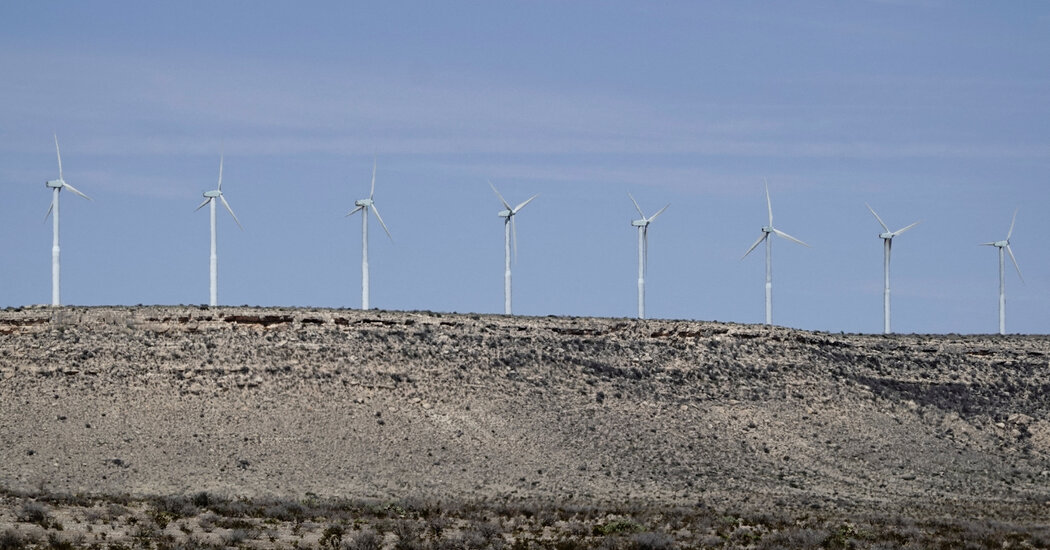
Over the course of a century, NextEra has evolved into an influential power provider that began as a regional utility in Florida. The company now runs subsidiaries that own large solar and wind power farms in the West, operates nuclear power plants in Wisconsin, New Hampshire and Florida, and owns tens of thousands of miles of power lines.
NextEra has sought for years to grow its operations by acquiring other utility companies across the country but with little success. Efforts to purchase Hawaiian Electric, the state’s largest utility; Oncor, in Texas; and North Carolina’s Duke Energy, one of the nation’s largest retail providers, all fell through.
In 2019, NextEra bought a small Florida utility, Gulf Power, which operates largely in the state’s panhandle. But after Hurricane Milton hit Florida in 2024, the former Gulf Power customers faced a storm surcharge that caused significant increases in their bills. And the war in Ukraine increased fuel costs for many NextEra retail customers.
Though those costs have eased, NextEra’s Florida customers recently saw a $7 billion increase in their rates, largely affecting residential and small business customers. The state-appointed consumer representative and a coalition of energy and justice organizations have appealed the rate increase to the Florida Supreme Court.
NextEra owns Florida Power & Light, which supplies power to about 55 percent of Florida’s households and has continually sought to grow its operations by purchasing cooperative and municipal utilities. An attempt to acquire the Jacksonville Electric Authority, a municipal utility, for $11 billion ended after issues were raised about conflicts of interest within the city’s operations.
As it has continued to seek to diversify its business, NextEra began pursuing other kinds of utilities outside of the electricity business. In 2022, the company completed the acquisition of a water utility in Texas.
Dominion operates a diverse electricity generation fleet that includes three major nuclear plants, and has been building one of the largest offshore wind farms in the country to serve its 4 million customers.
The utility had ambitions of helping to grow the nation’s offshore wind power farms by constructing a 472-foot-long ship, named Charybdis after a mythical sea monster, to help with installation of large turbines in the ocean.
But Mr. Trump’s disdain for offshore wind power has led to cancellation of some projects and could hurt the more than $700 million Dominion has invested in the vessel.
Otherwise, Dominion has been widely seen as a stable company that expanded its own operations when it purchased the South Carolina utility SCANA in 2019, after that utility had filed bankruptcy following a failed nuclear project.
[ad_2]
Source link