

[ad_1]
Expert breaks down China’s influence on Iran, US foreign policy
Dennis Citrinowicz, an analyst at the Institute for National Security Studies, explains China’s complex role in the Iran conflict and its strategic implications for America. He highlights that China, while not wanting Iranian nuclear weapons, benefits from US focus on Iran, potentially draining munitions needed for Taiwan. Citrinowicz expresses pessimism about easy solutions given both sides’ firm stances.
NEWYou can now listen to Fox News articles!
The U.S. is trying to choke off Iran’s economy at sea, but a growing China-linked rail corridor is giving Tehran a workaround that Washington cannot easily shut down without risking a wider conflict.
As freight traffic between China and Iran increases along an overland route beyond the reach of American warships, the dynamic is exposing a core limitation in the U.S. strategy: maritime pressure is powerful, but it doesn’t fully extend across Eurasia.
According to Bloomberg, cargo trains running from central China to Iran have jumped from roughly one per week before the blockade to one every three or four days, highlighting a growing alternative channel as Tehran looks to blunt maritime pressure.
The corridor runs through multiple sovereign countries, including Kazakhstan and Turkmenistan, making it far more complex to disrupt than shipping lanes in the Persian Gulf.
CHINA-LINKED ROUTE EXPOSED AFTER US SEIZES IRAN-BOUND SHIP WITH SUSPECTED DUAL-USE CARGO

The U.S. is trying to choke off Iran’s economy at sea, but a growing China-linked rail corridor is giving Tehran a workaround that Washington can’t easily shut down without risking a wider conflict. (Zinyange Auntony / AFP via Getty Images)
Directly targeting that overland network would risk widening the conflict and escalating tensions with Beijing, which has spent years investing in trade routes designed to bypass maritime choke points dominated by the U.S. Navy.
That combination of geography, diplomacy and escalation risk helps explain why Washington has focused overwhelmingly on maritime interdiction rather than attempting to shut down overland trade routes.
Experts say the rail corridor remains limited in its ability to offset Iran’s main oil exports.
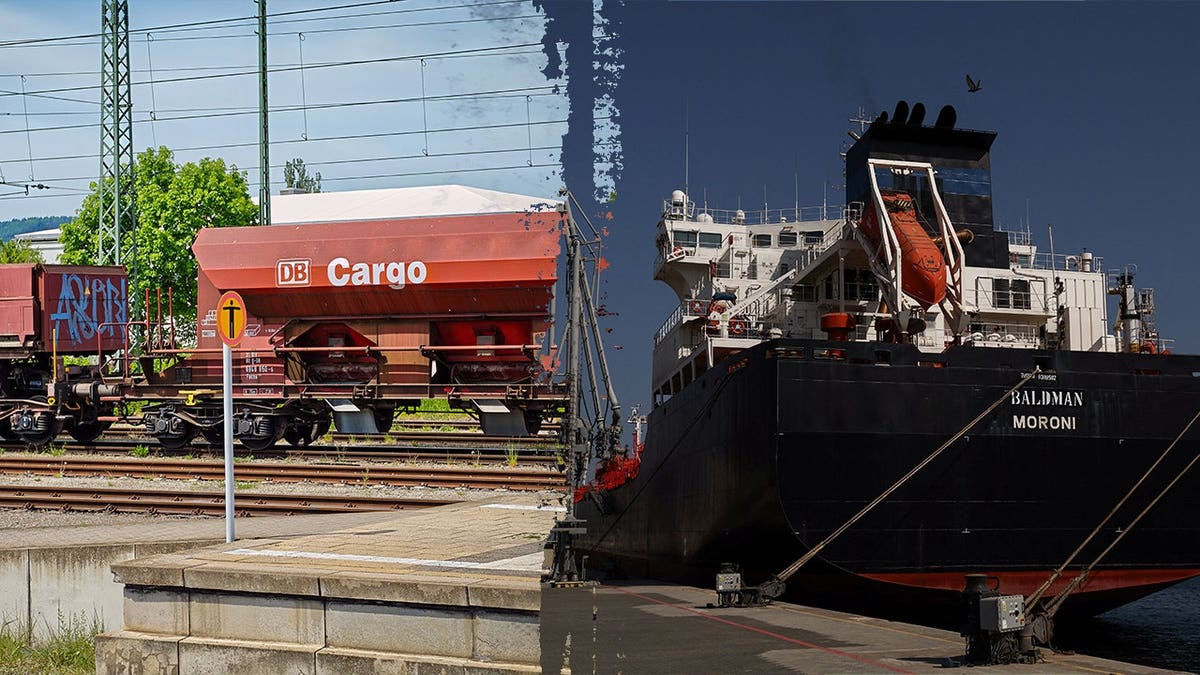
The U.S. is trying to choke off Iran’s economy at sea, but a growing China-linked rail corridor is giving Tehran a workaround that Washington can’t easily shut down without risking a wider conflict. (Michael Nguyen/NurPhoto via Getty Images:Amr Alfiky/Reuters)
“There’s no substitute for a very large crude carrier,” Isaac Kardon, a senior fellow focused on Chinese strategy and maritime security, told Fox News Digital.
Kardon estimated that “maybe like 1% of the exports that Iran would typically be pushing out through Hormuz could go over land.”
Max Meizlish, a former Treasury official focused on sanctions policy, similarly described the rail corridor as “a drop in the bucket compared to Iran’s traditional oil exports over maritime transit routes.”
TRUMP WARNS CHINA OF ‘STAGGERING’ 50% TARIFF IF CAUGHT SUPPLYING MILITARY AID TO IRAN
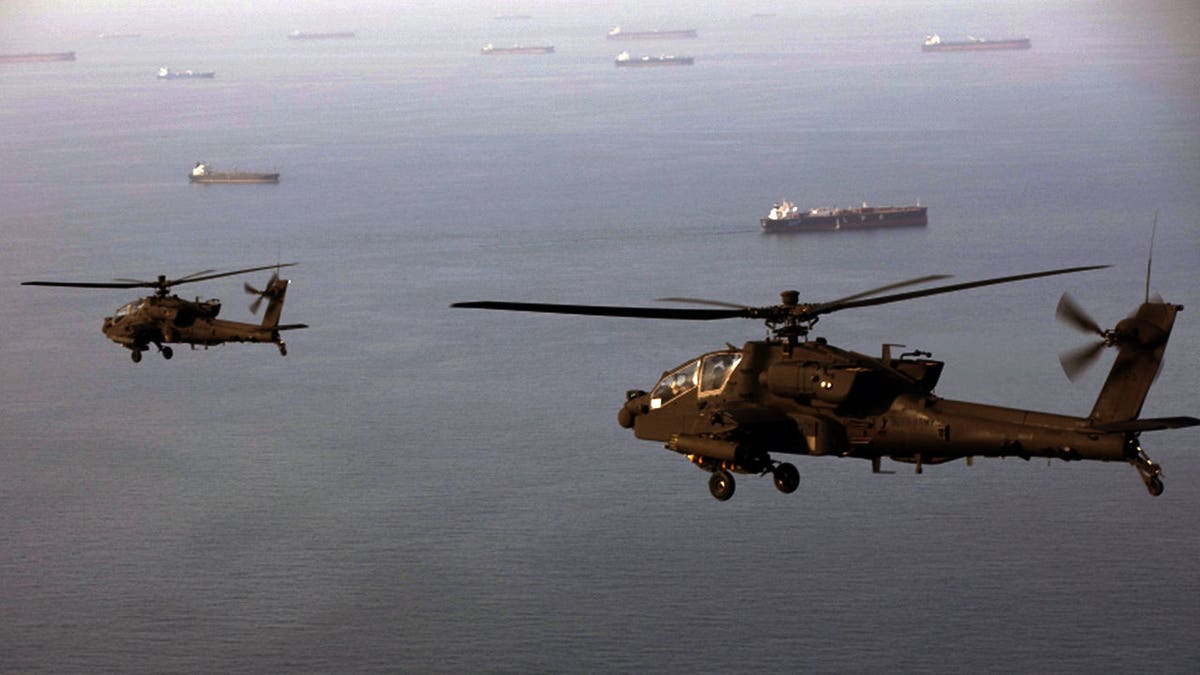
The U.S. military has been enforcing a naval blockade in the Strait of Hormuz, even during the ceasefire. (U.S. Central Command)
Still, analysts warn the route carries strategic risks beyond its limited scale.
Meizlish said the rail network “provides a pathway for China to supply Iran with critical dual use goods or just military logistical infrastructure” beyond the reach of U.S. naval enforcement.
Kardon pointed to similar concerns, including the potential movement of “parts for drones” and “missile precursor chemicals.”
Even so, Kardon emphasized the corridor cannot sustain large-scale economic or military flows.
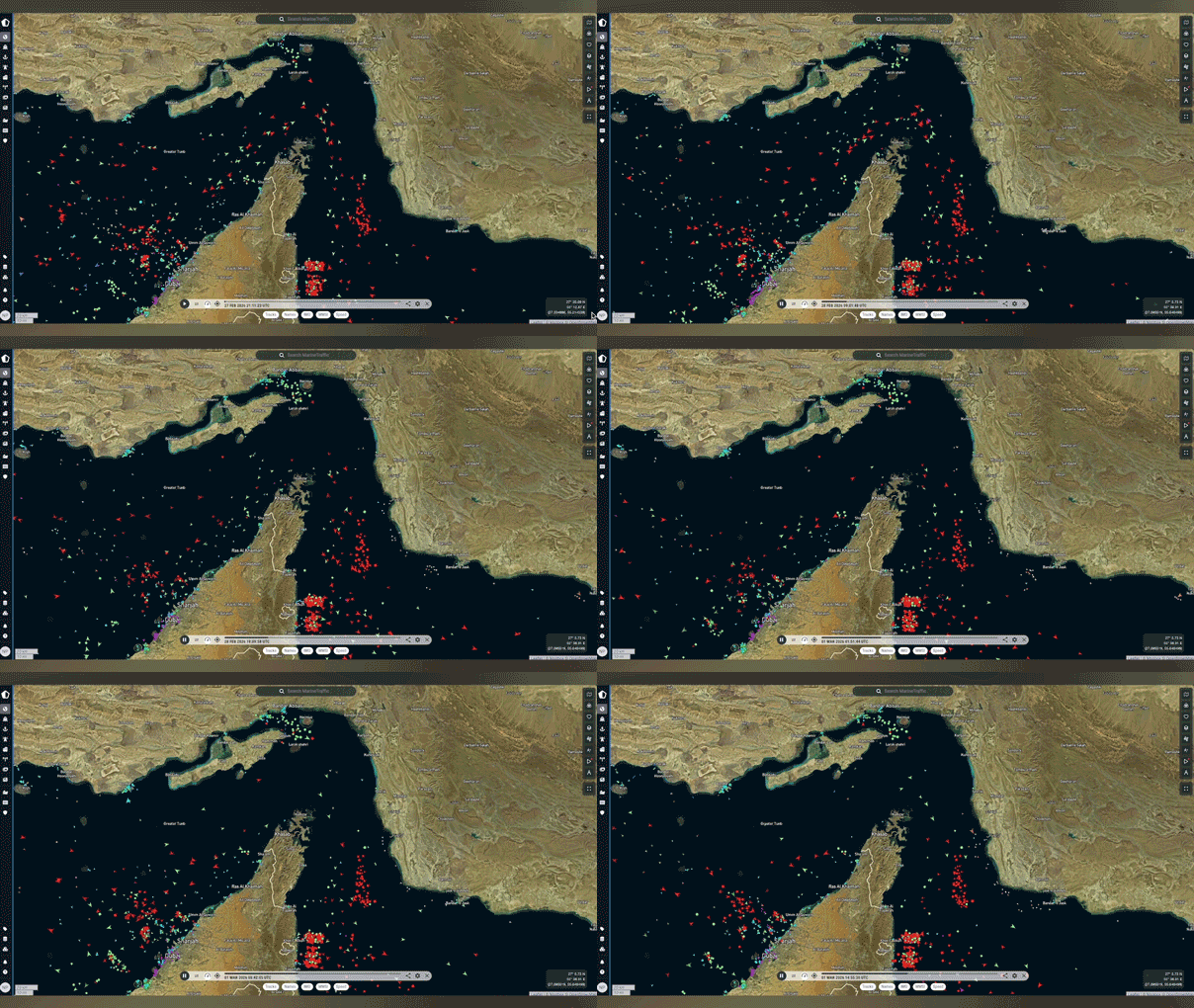
A timelapse video shows marine vessels moving through the Strait of Hormuz. (Kpler/Marine Traffic)
CLICK HERE TO DOWNLOAD THE FOX NEWS APP
“It’s a flow question,” he said. “Can you sustain the Iranian war-fighting effort solely with cargoes from China or from its other Eurasian neighbors? And I think the answer is really no.”
Taken together, the rail corridor is not an economic lifeline for Iran, but it underscores a broader shift as China builds trade networks designed to blunt U.S. pressure at sea and test the limits of how far Washington is willing to go to enforce its strategy.
The White House and the Pentagon did not respond to requests for comment.
[ad_2]
Source link


редукторное масло купить https://reduktornoe-maslo.ru
Увлекаешься охотой? охотничьи интернет магазины предлагает необходимые товары для охотников, туристов и любителей природы. В каталоге представлены охотничья экипировка, охотничья одежда, обувь, оптика, полезные аксессуары и снаряжение для походов. Подбирайте нужное снаряжение, ориентируйтесь на свои задачи и покупайте продукцию через сайт. Большой ассортимент поможет быстро найти нужные товары.
Важные детали по ссылке: https://stroyproektrnd.ru
A practical wellness website healthfare focused on healthy living, nutrition, and self-care. Visitors can explore informative publications on healthy eating, along with everyday wellness tips. Additional content includes product overviews. The content also covers healthy habits, diet and nutrition, physical activity, personal care, and overall well-being.
Выгодно прямо сейчас купить игровой компьютер в москве для максимальной производительности. В ассортименте доступны готовые сборки. Рассматривайте компьютер по мощности. При выборе смотрите на SSD. Для комфортного гейминга важны эффективное охлаждение. Выбирайте в интернет-магазине и оформляйте доставку по нужному адресу.
Выберите игровой раздел https://belnp.ru в удобном онлайн-режиме. Попробуйте понравившийся слот и переходите к игровому процессу. В разделе развлечений представлены игровые категории. Выбрали игру? Открывайте игровой раздел. Перед игрой ознакомьтесь с правилами и условиями сервиса.