
[ad_1]
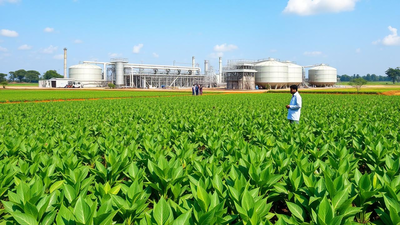
The Centre on Monday said India has “ample” fertiliser stocks to meet demand for the upcoming Kharif sowing season and appealed to farmers not to resort to panic buying amid concerns triggered by the Middle East situation, PTI reported.Addressing an inter-ministerial briefing on recent developments in Middle East, Aparna S Sharma, Additional Secretary in the Department of Fertilizers, said the country’s fertiliser security remains “comfortable and well managed”.“India’s fertiliser security remains comfortable and well managed,” Sharma said.She said the government has ensured sufficient domestic production as well as imports of urea and other key nutrients to meet demand during the peak Kharif season.According to the Department of Agriculture’s assessment, fertiliser requirement for Kharif 2026 stands at 390.54 lakh tonnes.“As on date for the season of Kharif 2026, based on the fertiliser requirement that has been assessed by the Department of Agriculture, the stock is more than 51 per cent,” Sharma said.She noted that the current stock position is significantly higher than the usual benchmark of around 33 per cent of seasonal demand.“So the fertiliser stock is comfortable, and the MRP of major fertiliser remains very much the same,” she added.The official said India has secured additional imports to strengthen availability ahead of the sowing season, which is expected to intensify over the next 15-20 days.“Further 12 lakh tonnes of DAP (di-ammonium phosphate), 4 lakh tonnes of triple super phosphate, and 3 lakh tonnes of ammonium sulfate have been secured for the country. This will ensure adequate availability for the peak season,” Sharma said.India has also secured 7 lakh tonnes of NPK complexes from global suppliers.The government said domestic fertiliser production and imports have remained strong despite global supply disruptions.After the recent crisis period, domestic production stood at 76.78 lakh tonnes while imports were 19.94 lakh tonnes.“So a total of 97 lakh metric tonnes of fertiliser has been added to the availability after the crisis situation,” Sharma said.The Centre said urea plants across the country are operating at full capacity while phosphatic and potassic fertilisers are also being produced normally.The government also highlighted that maximum retail prices (MRPs) of major fertilisers have remained unchanged despite a sharp increase in global prices.At present, the MRP of neem-coated urea remains fixed at Rs 242 per 45 kg bag, while DAP is priced at Rs 1,350 per 50 kg bag.Sharma acknowledged that there had been “some panic buying initially” but urged farmers not to hoard fertilisers.“There has been some panic buying initially. Our appeal is that ample stock is available,” she said.The Centre said states are actively monitoring hoarding, diversion and black marketing of fertilisers.“Regarding the demand management measures, the state level already efforts are being made, and we have the state level interventions to ensure that the fertilisers are not misused or hoarded, or they are not black-marketed,” Sharma said, PTI quoted.The government is also promoting balanced use of fertilisers and alternative soil nutrients through agricultural universities and Krishi Vigyan Kendras to reduce excessive dependence on chemical fertilisers.An empowered group of secretaries is reviewing the fertiliser situation every week, Sharma said.India’s urea production has increased significantly over the last decade, rising from 225 lakh tonnes in 2014-15 to 306.67 lakh tonnes in 2024-25.However, the country still imported more than 100 lakh tonnes of urea in the last fiscal year to meet domestic demand.The Centre has projected fertiliser subsidy expenditure at Rs 1,70,805 crore for 2026-27, though officials indicated the subsidy burden could rise further because of higher import costs linked to global price volatility.
[ad_2]
Source link

Удивило, что в наличии есть запчасти даже на технику, снятую с производства лет пятнадцать назад. Заказывал комплектующие на эндуро, приехали целыми, с заводской маркировкой и без брака. Купил по номеру подшипники ступицы, размеры совпали до десятых долей миллиметра. Дорогие узлы обычно бьют по бюджету, но здесь ценник остаётся в рамках. Звонил уточнить по тормозной жидкости, разницу между вариантами объяснили и дорогое навязывать не стали. Сайт не тормозит, страницы открываются даже на медленном мобильном интернете. Наложенный платёж спасает, когда сумма немаленькая и коробку хочется вскрыть на месте. Рекомендую тем, кто устал от продавцов, которые пропадают сразу после оплаты. Перед первой самостоятельной разборкой выручает толковый сайт по мото. Когда подбираешь замену, год выпуска и модификацию лучше уточнить: у рестайлинговых версий крепления часто другие.
Kiedy ktoś pyta, czym VR różni się od kina trójwymiarowego, odpowiadam, że poczuciem obecności. Opaska PS VR2 zaskoczyła mnie bardziej niż grafika, bo nic nie uwiera i nie muszę jej poprawiać w trakcie gry. Szukałem kiedyś okularów VR do Xbox One i skończyło się na zakupie komputera. Lubię gogle na telefon za to, że obywają się bez kabli i komputera, wystarczy sam smartfon. Symulatory lotnicze i wyścigowe to powód, dla którego w ogóle gram w VR na komputerze. Zaczynałem od najtańszych gogli na telefon i dopiero potem odłożyłem na porządny zestaw. Odkąd dopasowałem odległość między soczewkami do swoich oczu, obraz mam ostry i głowa już nie boli. Zawroty głowy odpuściły po przejściu na granie na siedząco i spokojniejsze tytuły na start. Nikt w Polsce chyba nie wytrzymałby tygodnia ciągłego grania w okularach VR – szalony maraton VR. Z doświadczenia wiem, że opinie użytkowników mówią o komforcie więcej niż tabelki w porównaniach.